
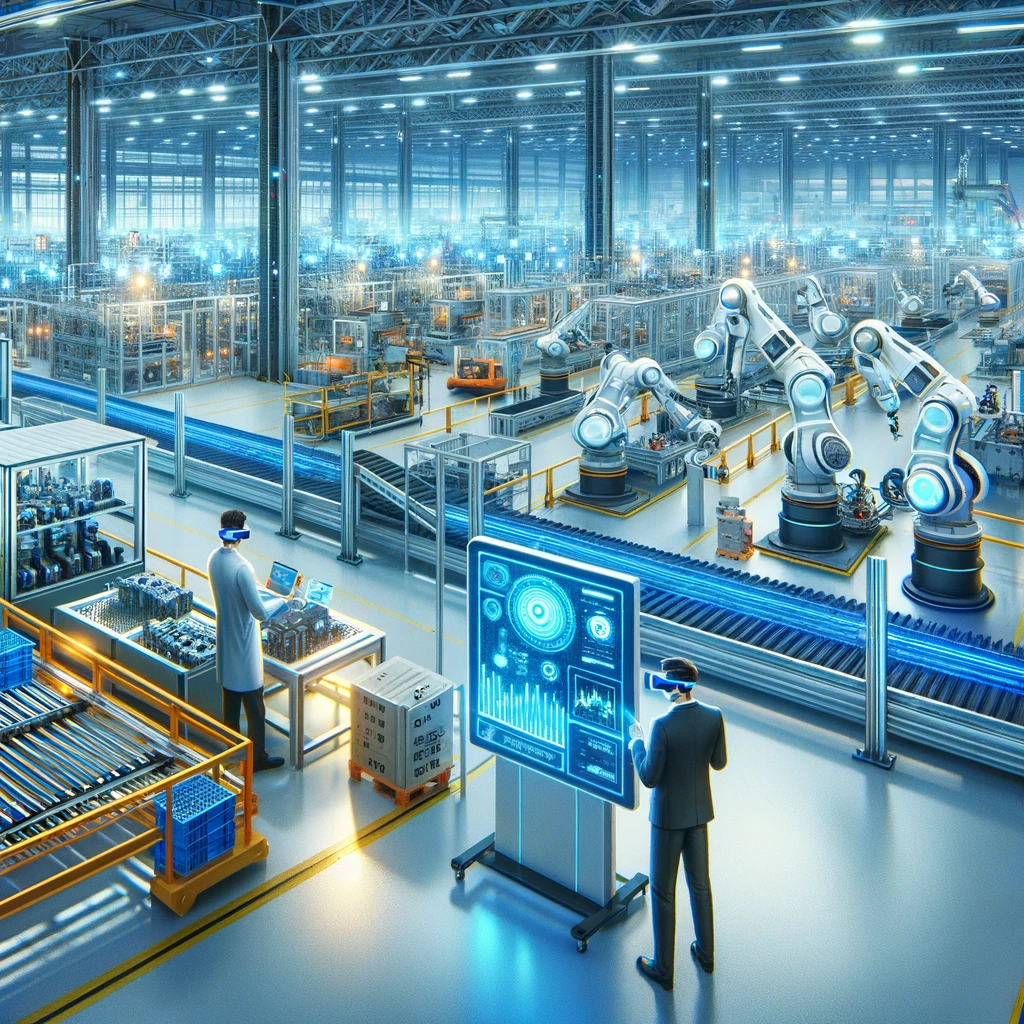
The advent of Artificial Intelligence (AI) in the manufacturing sector marks a pivotal shift in how industries operate, innovate, and produce. By integrating AI technologies, manufacturing processes are becoming smarter, safer, and more efficient. This article explores the multifaceted role of AI in manufacturing, showcasing real-world examples and highlighting the tools that are driving this transformation.
Enhanced Efficiency and Productivity
One of the primary benefits of AI in manufacturing is the significant boost in efficiency and productivity. AI algorithms can predict equipment failures before they occur, minimizing downtime and maintaining a steady flow of production. For instance, General Electric uses AI-powered Predix platform to predict maintenance needs, saving millions of dollars in unscheduled downtime. Similarly, Siemens employs neural networks to monitor its production lines, ensuring optimal performance and reducing energy consumption.
Quality Control
AI-driven quality control systems represent a monumental leap forward. These systems use machine learning and computer vision to inspect and identify defects in products with a precision and speed unattainable by human inspectors. An example of this is in the automotive industry, where companies like BMW have implemented AI-based optical inspection systems to examine parts in real-time, significantly reducing the rate of defects and improving overall product quality.
Supply Chain Optimization
AI is also revolutionizing supply chain management by predicting demand, optimizing routes, and managing inventory with unprecedented accuracy. Through machine learning algorithms, AI can analyze vast datasets to forecast demand trends, enabling manufacturers to adjust their production schedules accordingly. For example, Intel has leveraged AI to transform its supply chain, resulting in a 25% reduction in inventory costs and a 58% decrease in supply chain forecasting errors.
Customization and Design
In the realm of product design and customization, AI opens up new horizons for manufacturers to meet specific customer demands with greater agility. Adidas, through its Speedfactory initiative, utilizes AI and robotics to create customized shoes at a pace and level of personalization previously deemed impossible. This approach not only caters to individual preferences but also significantly shortens the product development cycle.
Tools and Platforms Supporting AI in Manufacturing
Several tools and platforms have emerged to support the integration of AI in manufacturing. These include:
- TensorFlow and PyTorch: Open-source frameworks for machine learning that enable the development of complex algorithms for predictive maintenance, quality control, and demand forecasting.
- Predix: GE’s industrial IoT platform that offers analytics and machine learning capabilities for predictive maintenance.
- KUKA: Specializes in robotics and automation solutions, incorporating AI to enhance manufacturing processes.
- NVIDIA Deep Learning AI: Provides powerful GPU-accelerated platforms for deep learning and AI applications in manufacturing.
- SAP Leonardo: Integrates machine learning, IoT, and analytics for smarter manufacturing and supply chain management.
AI’s role in manufacturing is undeniably transformative, offering solutions that are reshaping the industry’s landscape. From improving efficiency and quality to enabling customization and optimizing supply chains, AI technologies are at the forefront of industrial innovation. As these technologies continue to evolve, the potential for further advancements in manufacturing processes is limitless. The examples and tools highlighted in this article are just the tip of the iceberg, signaling a future where AI and manufacturing are inextricably linked.
Applying Artificial Intelligence (AI) to manufacturing systems brings a wealth of opportunities and challenges. Below, we explore the advantages, disadvantages, and possible risks associated with integrating AI into manufacturing processes.
Advantages
- Increased Efficiency and Productivity: AI can automate repetitive tasks, optimize production workflows, and minimize machine downtime through predictive maintenance, leading to significant increases in efficiency and productivity.
- Improved Quality Control: With AI-powered visual inspection systems, manufacturers can achieve higher accuracy in detecting defects or inconsistencies, ensuring products meet quality standards.
- Supply Chain Optimization: AI enhances supply chain management by predicting demand, optimizing inventory levels, and routing logistics, thereby reducing costs and improving delivery times.
- Energy and Cost Savings: AI systems can optimize energy consumption and operational costs by identifying inefficiencies and suggesting improvements.
- Customization and Innovation: AI enables the customization of products to meet individual customer preferences and supports the rapid prototyping of new products through generative design algorithms.
Disadvantages
- High Initial Investment: The integration of AI into manufacturing systems requires substantial upfront investments in technology, infrastructure, and training.
- Complexity and Integration Challenges: Implementing AI solutions may involve overcoming significant technical challenges, including the integration with existing systems and processes.
- Skilled Workforce Requirement: There is a high demand for skilled professionals who can develop, deploy, and maintain AI systems, potentially leading to a skills gap.
- Dependency on Data: AI’s effectiveness is heavily reliant on the quantity and quality of data, making systems vulnerable to inaccuracies if data is biased or flawed.
- Job Displacement Concerns: The automation of tasks previously performed by humans can lead to job displacement and workforce restructuring, raising ethical and social concerns.
Possible Risks
- Security Vulnerabilities: AI systems can be targets for cyberattacks, risking sensitive data and operational integrity. Ensuring robust cybersecurity measures is crucial.
- Loss of Human Oversight: Over-reliance on AI could lead to a scenario where critical decision-making is deferred to algorithms without adequate human oversight, potentially resulting in unforeseen consequences.
- Ethical and Bias Issues: AI systems can inadvertently perpetuate or amplify biases present in their training data, leading to unfair or discriminatory outcomes.
- Operational Disruption: The failure of AI systems, due to technical glitches or errors, can cause significant operational disruptions and financial losses.
- Regulatory Compliance: Navigating the regulatory landscape, which may evolve to address the complexities introduced by AI, poses a challenge for manufacturers.
Conclusion
The application of AI in manufacturing systems offers transformative potential, driving efficiencies, innovation, and competitive advantage. However, navigating the disadvantages and mitigating the risks associated with AI integration are critical to harnessing its full potential while ensuring ethical, secure, and sustainable manufacturing practices. The journey towards AI-enhanced manufacturing requires careful planning, ongoing evaluation, and a commitment to adapting to the evolving technological landscape.
Leave a Reply